
It’s become too easy to get sucked into the vortex of clickbait “training advice” — often from half-naked fitness influencers, ripped athletes, or your friend Becky who heard it from someone on TikTok.
Don’t get me wrong: there’s good advice out there. But it’s buried in noise — and packaged for seven-second attention spans, fueling the illusion that anything meaningful can be learned in seven seconds.
Most of this noise is built on someone’s curated highlight reel. What worked for a pro athlete. What looks good on someone highly photogenic.
But looks can be deceiving.
I’ve met a lot of “fit” people living in chronic pain, riddled with dysfunction and compensation. Looking good has become the gold standard — not how well you actually move, what your joints can handle, or how resilient your body is in real-life situations. Are you able to be active with your family members and friends? Can you still saddle up for those backpacking adventures you love?
Why the Fitness Industry is So Confusing
We’ve lost critical thinking around what training is actually for.
It’s easy to be a gym rat when your fitness never gets tested outside the gym — never mind what principles your fitness is built on. Being active is great, but that’s vague. What’s your anchor? Longevity? Aesthetics? Yoga? Powerlifting?
And if your anchor is training like a professional powerlifter while living like a desk-bound hobbyist — how’s that going?
So, what should your training be anchored in, whether you’re a hobbyist or a pro athlete?
Here’s a starting point: Joint health.
Not as an accessory. As a non-negotiable.
Not something you graduate from. Something you keep doing.
If you’re not convinced it matters, it will — eventually. Why wait until it does?
“I Tried It and It Didn’t Work”
My friend Hunter Cook recently shared a line he hears all the time:
“I tried FRC and it didn’t work.”
“I tried strength training and it didn’t work.”
You can be right about the wrong thing.
Meaning: maybe it “didn’t work” because you never actually committed to the thing. You tried the appetizer and left before the entrée.
What was your working definition of “training”?
What methods did you use?
How long did you stick with it?
What problem were you trying to solve?
There are a dozen more questions I’d ask.
Trying new activities is great for your mental health, sense of novelty, and community. But don’t confuse that with having a long-term physical plan.
You’re a Hobbyist or a Pro Athlete. Train Like It.
Some of you are hobbyists acting like pros — chasing too many things, overloading your body, confusing volume with progress, and performance with longevity.
Some of you are pros forgetting that your body is your job — not a playground.
Either way, you're missing the point:
You fall into extremes.
You bounce between injuries and sports.
You train the same way and wonder why the problems don’t go away.
Or — you underdo it. Thinking less is somehow safer. That’s just as flawed.
Where to Start Instead
Start with the basics: your joint health.
Build from the inside out.
This won’t be something you’re instantly good at. It’s a practice. One that requires attention, repetition, and physical self-awareness — probably in ways you’ve never trained before.
The good news? Once you start, you’ll see why so many providers and pro teams stick with it—it works, and there’s more to it than you might expect.
You’ll get clarity on what your body needs. You’ll feel what your joints can and can’t do — and how they respond to stress, load, and time. Some sensations will be pleasant. Many will be uncomfortable. And few, hopefully, not painful. That discomfort is part of the process.
Much of this training is rooted in building you a buffer where it counts — to help mitigate when life, sport, or work throws more at you than you expected.
It’s your body. Take your time. Pay attention. Learn. Practice. Repeat.
Joint Health Is a Practice, Not a Gift
Think of joint health like playing piano: stop practicing, and you lose the skill. Usually faster than you gained it.
No one wakes up with a strong aerobic base.
No one magically gets stronger or more mobile without putting in the work.
No one picks up a piano after 10 years and plays like Mozart.
Every physical quality — strength, endurance, joint health — is earned through practice, time, and effort. Borrowing another line from Dr Andreo Spina.
More Volume ≠ More Specific
Most people — hobbyists and pros alike — think more is better. More weights. More workouts. More sports.
But more isn’t specific. It’s just more.
Example: I work with a young pitcher.
His strength coaches load him up in the gym.
His baseball coaches crank up his pitch volume.
The result?
Yes, more skill. Yes, more strength.
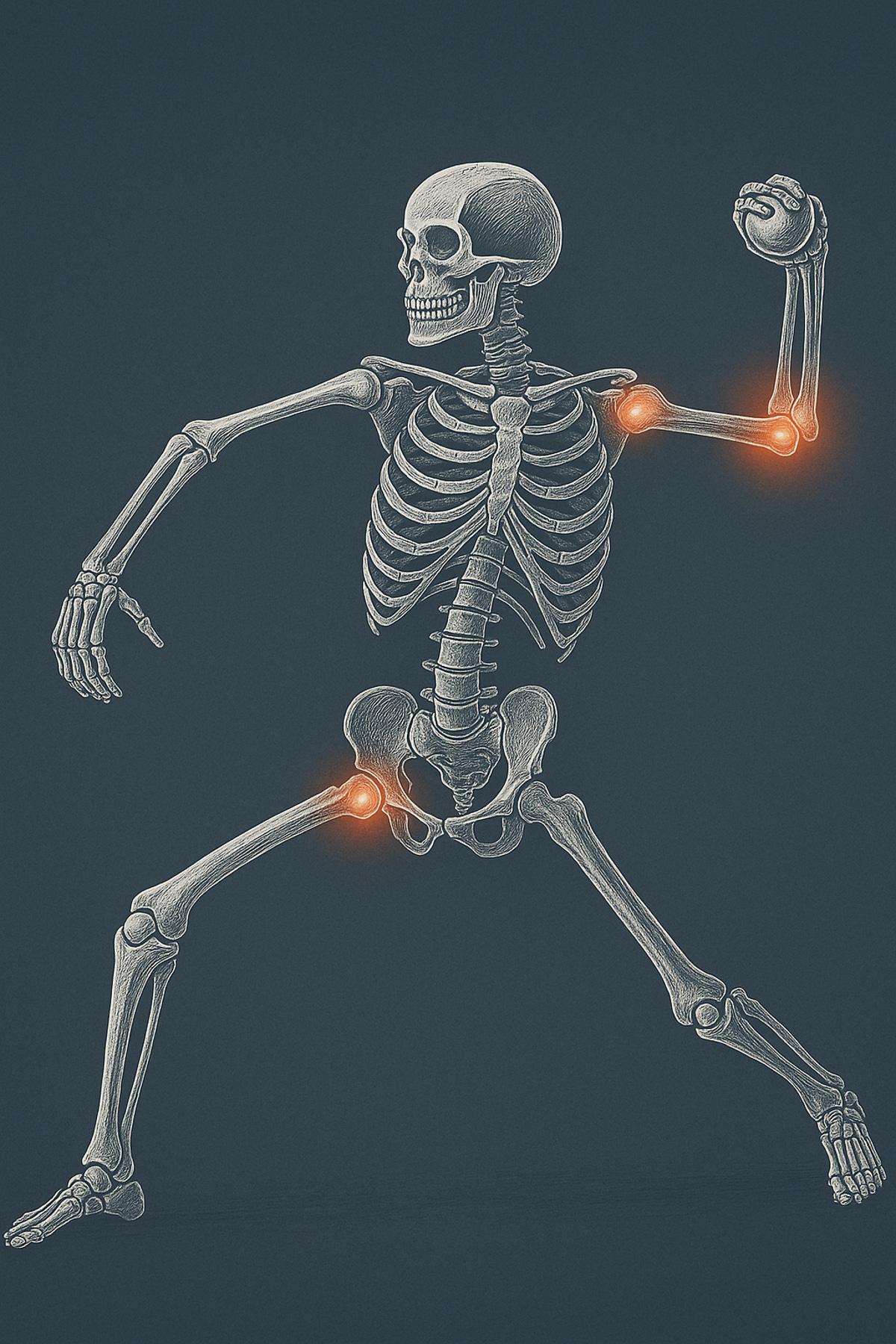
But no joint-specific work for the sport of baseball — a sport built on extreme, repetitive joint demands.
So what happens?
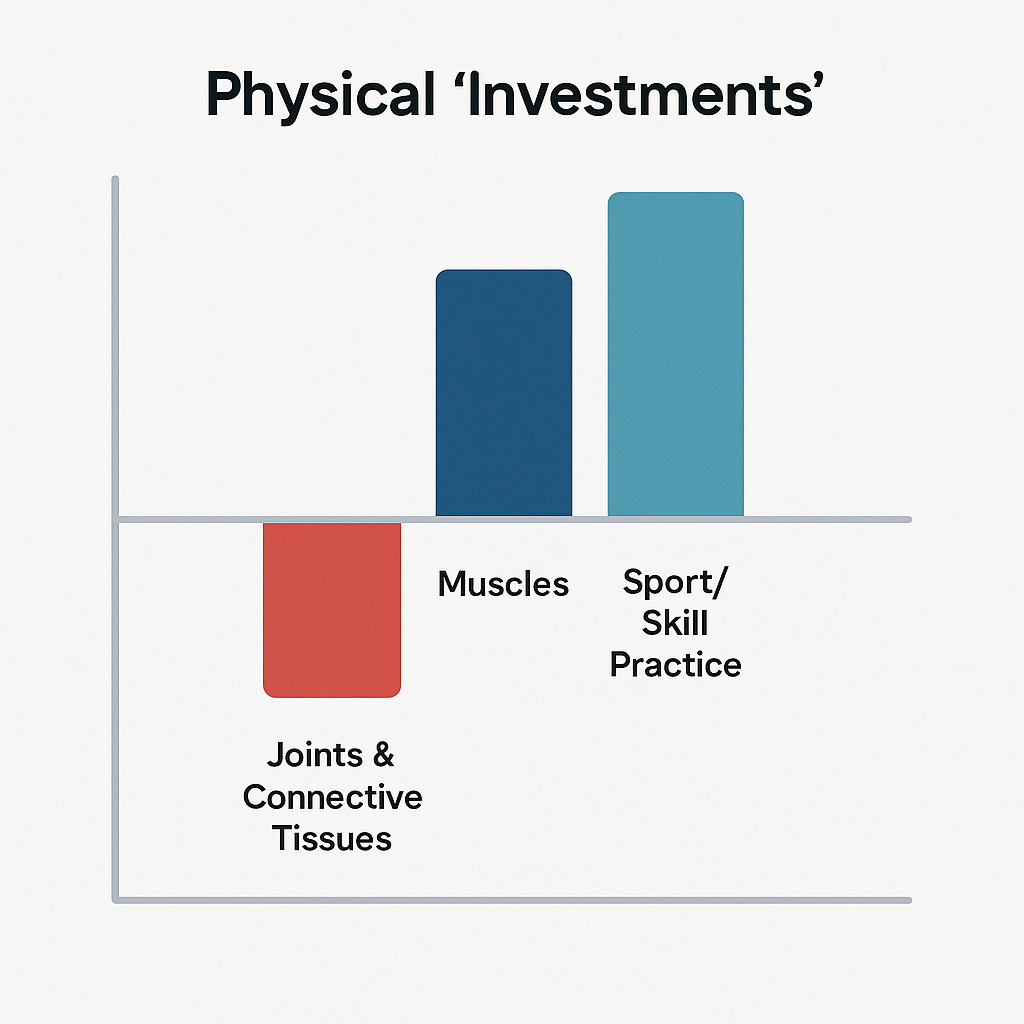
His shoulder and elbow are inflamed and compensating.
The connective tissue can't keep up.
That’s why he came to me. Because more wasn’t solving anything.
Not more pitching. Not more lifting.
Are both necessary? Absolutely. But you can’t keep spending all your physical resources on lifting and sport-specific practice without reinvesting in the joint and connective tissue systems that support it. You can ignore that—but it comes at a cost.
So, How Should You Train?
If you’re a pro athlete, your body is your paycheck.
You’re consciously trading long-term joint health for short-term performance. That’s your choice — but train your joints to try and mitigate that cost.
If you’re a hobbyist, you’re not getting paid to push your body to the edge. You’re training for longevity, function, and enjoyment—so let your approach reflect that.
You need to train your joints despite your sport.
Pro athletes need to train their joints because of their sport.
You don’t need a new trend.
You need first principles.
You need joint health. Build from there.
If you’re interested in 1:1 training or are an FRS® provider looking for guidance, visit www.theartofstrong.com.
If you’re a fitness professional or manual therapist interested in our courses, visit www.functionalanatomyseminars.com.