
How do you know – better yet, how can you know whether or not you’re recovered from an injury and ready to return to play?
This is a nuanced question that both athletes and providers often struggle to answer clearly. The range of experiences in the trenches of injury management can make it hard to quantify what counts as recovery. Some athletes return to their sport claiming to be in the best shape of their life. Some never make the return, forever sidelined by their injury. Some have mixed success. Others plant their stake in hot yoga or magnesium supplements as the missing piece that finally solved their injury. Experience is a valuable teacher, but it also has a lot of blindspots and biases.
Recovery does not have to be that complex, but it also isn’t so simple that hanging your hat on a strict timeline, movement tests, athlete feedback, or an MRI is the end goal that signifies ‘recovered’.
A simple heuristic can help answer what it means to be on the path to recovery:
What is the ability of the injured tissue to tolerate stress, specific to how that tissue was injured?
This is so important to understand, either as an athlete or as a provider, because—oversimplifying for the sake of making a point—if your recovery process never includes repeated ‘tests’ that are both injury- and tissue-specific, you can’t confidently claim you’ve 'recovered. Never mind doing these tests over time, not just during an initial block of rehab.
I want to share my direct experience with how I’ve dealt with my own injuries, which are not trivial—especially given the repeated exposure to the same stressors that were once the source of chronic injury. This is something I do as a way of getting non-negotiable feedback as to the efficacy of the approach I use not just with myself, but as a big-picture approach to managing injuries and developing athletes.
The Injury
When I was 21, I experienced my first surgery as the consequence of a sparring incident in Judo. I was training overseas at the University of Bristol, studying Philosophy. Judo had been my hobby since transitioning away from wrestling at 18. For anyone unfamiliar with the goals of Judo: throw your opponent to the mat as hard as possible. That is how you win.
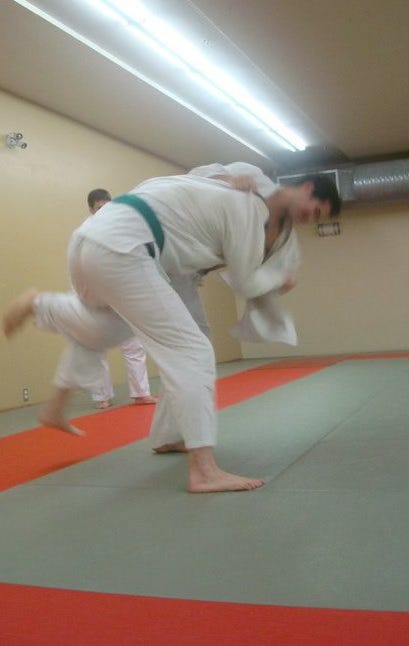
As thrilling as Judo was, it accelerated the wear and tear on my body (and no doubt anybody else’s body who has tried even just a bit of Judo). This nonsensical idea that you’re indestructible because of youth was put to the test. I can tell you, between concussions, torn quadriceps tendons, broken toes, broken wrists, dislocated shoulders, torn ligaments in my knees, and repeated whiplash in my neck—youth is no guarantee of invulnerability.
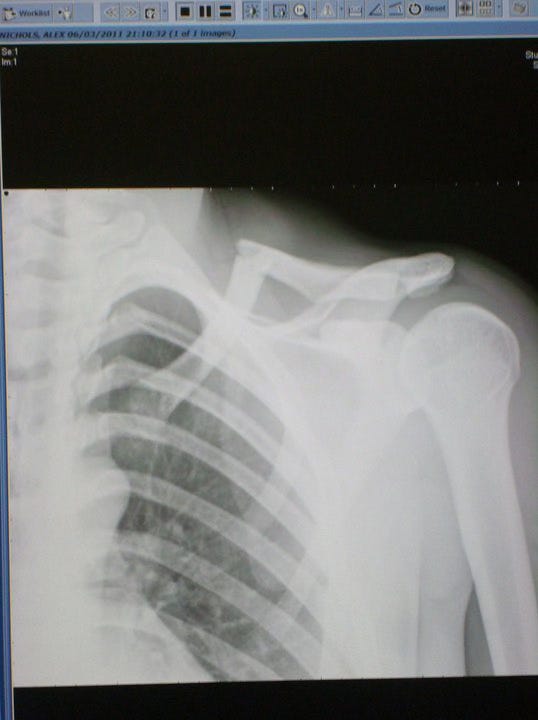
The demands of any martial art, especially combat ones, are highly insulting to your body. It is challenging for any young athlete to appreciate the demands of their preferred activities. Strength training wasn’t much insurance either (something I was regularly doing). It wasn’t until I was in the ambulance being wheeled away for a concussion plus a clavicle that had snapped in two (see image below) after a bad throw that I started to process something any young athlete struggles with: you can break.
The Struggle
The road to recovery was full of mixed advice. Don’t move too much. Don’t do things that hurt. Try swimming, try therabands—and the kicker: quit your sport. None of these are standalone bad advice, just incomplete. The question that was never answered was: what exactly do I need to do to return to Judo? What do I need to do for this injury, specifically?
After a few months of following the general advice I had been given, I tried returning to Judo, but only the newaza portion, which is grappling on the ground. Between the discomfort of metal plates and screws in bone from my surgery, the shoulder dysfunction I was dealing with was giving my body a lot of negative feedback. I didn’t want to risk insulting the surgical repair, but I also wanted to return to Judo.
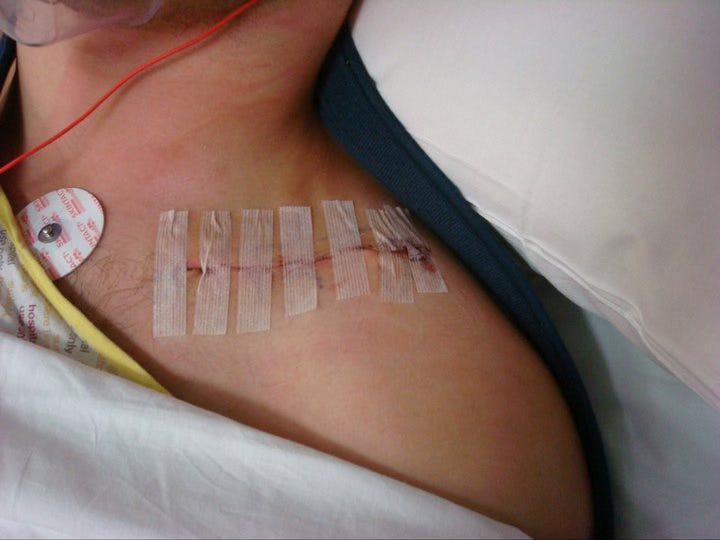
I continued to struggle with my left arm. I started using my hips and my legs more for attacks and off-balances. While this greatly improved my lower body strength and speed, I was compensating for a lack of left shoulder. Eventually, I started to get a really nasty pinch in my left hip. So bad, it often felt like I had lightning bolts funneling through my bones. I would often have to take a knee or hobble around and hope the pinching would subside.
Now I’d compensated my way to another injury. What do I do for this pinching hip?
The Shift
This was only a few years after my initial surgery. When you lose capacity somewhere (left shoulder), you make up for it elsewhere (left hip). That comes at a cost (more left shoulder dysfunction and more left hip pinching). I was desperate. For years I tried everything—from seeing the best physical therapists across three countries, to popular ‘mobility’ routines, breathing exercises, Theraguns, acupuncture, chiropractors… you name it. Nothing worked. My hip still pinched. I was now in the field as a personal trainer, reading and trying everything I could to solve my problem.
In 2017, I met Dr. Spina at a small seminar in Dartmouth, Nova Scotia, where I was visiting family. By this time, I had already undergone other surgeries for injuries ranging from chronic knee pain and swelling due to a torn quad tendon (where they decided to also remove a bursa sac—later discussed as being an unnecessary surgery), to other ligament tears, more bone breaks, and more torn tissue. What happened? Nothing changed. I continued to compensate, compete, and train regardless of my physical state. From about age 20 to 27, I was a physical mess.
Following the FRC course, I became very aware I “did not have a hip,” to quote Dr. Spina. Meaning, I had a hip, but I had terrible hip joint and tissue-specific capacities. Why? Because I had never trained them. All I had ever done was make repeated demands there—squatting, running, Judo, and daily activities. All of which use a hip, but none of which assess, treat, or train my hip-specific limitations. My years of compensation had compounded the costs I was presently dealing with.
The Work
It took me a year of hard work to clear up the pinch I had in that hip (and finally address my left shoulder). Using FRC® principles, I couldn’t believe I was not only able to clear up the hip pinch, but also get stronger and more mobile than I thought possible. The key was a lot more specificity and effort than I had been putting in. That meant isolating injured tissues using an evidence-based thought process and building them up so I could test them in the kinds of insulting positions I’d inevitably face in grappling.
I had spent years doing exercises and rehab that didn’t actually target the specific problems in my hip—or any of my joints, really. Learning a system like FRS® felt like finding a hidden room in your house. One you didn’t know was there, and one that could grow larger the more effort you put into it. That room represents capacity—more space to absorb stress, adapt, and thrive. But like any part of your home, it won’t maintain itself.
It was so much more work than I realized, but absolutely worth it. Something clicked when that pinch finally went away. It’s my hip, and I don’t want it to pinch anymore. Ultimately, I have to do the work to make that happen. You have to continue to signal to the body the adaptations you need. You have to do it daily. Make it a priority. Make the time. Keep at it.
The alternative is not worth it.
That meant a little less time prioritizing the fun things—running, Judo, Jiu-Jitsu, lifting weights—and more time prioritizing the work needed to build up my joints.
Think of your joint capacity like discovering that hidden room in your house. At first, it’s dark, unused, and cramped. But the more specific work you do—deliberate, targeted effort—the more that room expands, the more useful it becomes. But like any room, it needs regular upkeep. The lights won’t stay on by themselves. You have to keep showing up.
The Lesson
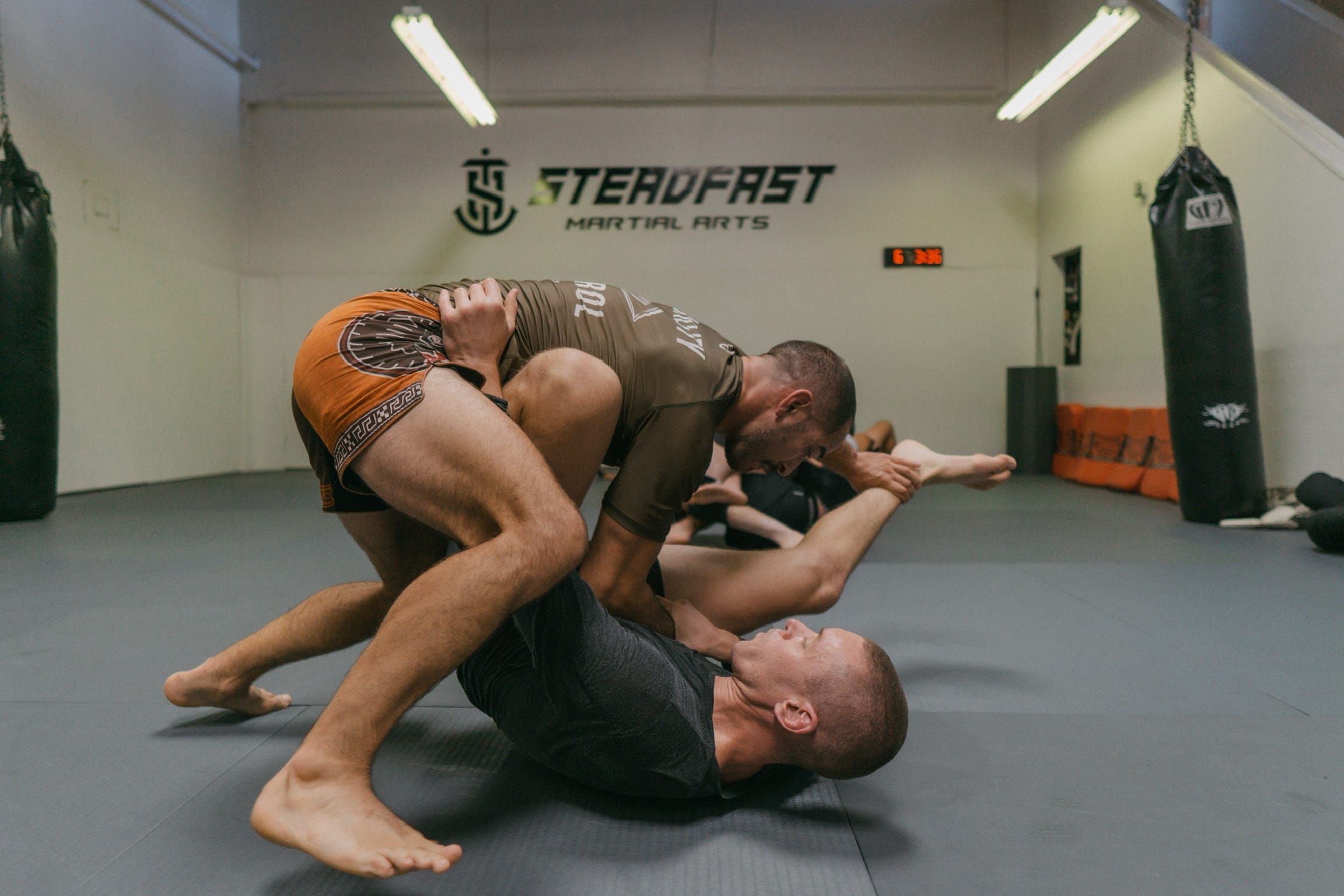
Ask yourself: do you want to return to your activity, that lift, or your sport? Or do you want to keep modifying your movements? It’s exhausting to constantly be on high alert because of movements you know you can’t or shouldn’t do—to play a sport with hesitation, anxiety, and fear of reinjury. You’d be better off converting that mental stress into tissue-specific training where you need it most to build a buffer for your goals and demands.
When I’m asked how much work an injury will take to return, I often throw the question back:
“How much work are you willing to do?”
When I ask this, what I really hear you asking is:
“Is it worth it?”
So ask yourself: is it worth having a better-functioning joint or not? And are you doing the right, tissue-specific work?
You won’t regret any time spent training your joints.
Joints and connective tissues require more energy and targeted effort to adapt than muscles do. Yet most training and rehab prioritizes muscle growth without considering the quality of the “scaffold” supporting it—your connective tissues. Muscle isn’t infinitely scalable; its quality depends heavily on the integrity of your joints and connective tissues. I’ve worked with many athletes who have impressive muscle mass but suffer from joint dysfunction, pain, and movement limitations because their connective tissues haven’t been properly trained or rehabilitated.
Connective tissue injuries are common, and plenty of research outlines the cellular consequences (Cugat et al., 2024; Cohen et al., 2019), guiding the FR® rationale for the inputs needed to restore healthy function. The challenge is not a lack of knowledge but delivering precise, tissue-specific interventions tailored to individual limitations and sport demands. Recovery isn’t about resting until pain stops or waiting for an MRI to look “clean.” It’s an active, ongoing process of progressively building tissue capacity beyond what it was before injury. That means regularly testing, training, and reassessing the exact tissues involved.
Your hip pinch, shoulder pain, or any injury isn’t “one thing.” It involves multiple tissues—joints, muscles, tendons, capsules—each requiring specific attention. Training must target these tissues at the right intensity and progression to build real resilience.
The good news is this: while it’s a lot of work, investing time and effort into your joints pays off.
It’s the foundation for long-term health, resilience, and freedom of movement.
So, ask yourself—what’s your alternative?
Start doing the specific work your joints and connective tissues need.
There’s no shortcut. No hack. Just consistent, focused training.
Physical health is freedom—and it’s worth every bit of effort.
If you’re interested in 1:1 training or are an FRS® provider looking for guidance, visit www.theartofstrong.com.
If you’re a fitness professional or manual therapist interested in our courses, visit www.functionalanatomyseminars.com.
References
Cugat, R., et al. (2024). Consensus Statement: The Role of Fibrosis in Muscle Injuries in Athletes. Orthopaedic Journal of Sports Medicine, 12(2), 23259671241266604.
https://journals.sagepub.com/doi/10.1177/23259671241266604
Cohen, R., et al. (2019). Sonographic Pattern of Muscle Injury Predicts Time to Return to Play in Elite Athletes. The American Journal of Sports Medicine, 47(6), 1381–1387.