
Few things are as frustrating as lingering injuries. You know what you want to do, but you're constantly falling short—whether it's movement, intensity, or confidence. Or maybe you're doing those things but paying for it afterward.
You might feel like you’ve tried everything. But ask yourself: when was the last time you updated the lens through which you see rehab and training? Injury management is a science—and an evolving one. Between cultural taboos, influencer noise, and outdated ideas, it’s easy to misplace your time and effort.
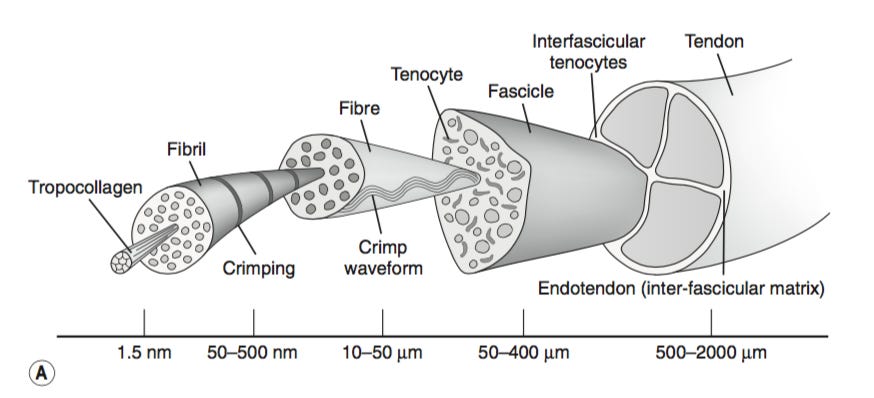
Injuries are not general. They happen in specific tissues, and those tissues adapt at a microscopic level. If you’re not addressing that directly, you may not be creating the change you need.
Injury Rehab Isn’t Just About Feeling Better
My goal here is to outline what to consider if you’re an athlete who’s “done everything” and still isn’t where you want to be.
We’ll talk about:
What rehab actually is
What standard rehab often misses
Why general exercise isn't enough
And what it looks like to truly prepare for a return to play in better condition than before
Most Athletes Undershoot the Rehab Process
The time between injury and return to play is critical for tissue remodeling. Most people undershoot how much specific work this actually requires.
Busy schedules, reliance on general exercises, and minimizing the real consequences of an injury can all lead to poor outcomes. Physical adaptations—especially for joints and connective tissue—don’t come from doing just enough of the standard stuff.
There’s No 'Enough' When It Comes to Joint and Connective Tissue Training
Here’s a bold claim: diminishing returns don’t apply the same way to joint and connective tissue work, given the number of athletes I’ve worked with that have vast deficits in these areas.
Most clients I meet haven’t done any structured joint or connective tissue training before. That means there’s already a huge gap—before we even address the injury itself.
These tissues also adapt more slowly than muscle. Consistent, high-quality practice is required to trigger meaningful change. That means the runway is longer—but so are the potential gains.
Is Your Rehab Actually Targeting the Injury?
In many rehab settings, joint and connective tissues are not the primary focus. That doesn’t mean it’s ineffective—but there’s a difference between:
Managing pain and improving general movement
Versus restoring specific tissue capacity and force tolerance
It’s outdated to assume you can progress from rest and general exercise to sport-ready performance. Athletes routinely return to play with suboptimal tissue —not because they aren’t trying, but because they may not have targeted the problem at its root.
Injured tissue might regain its normal length, but it may not be able to handle the same amount of stress as before. Even though you might get your range of motion back after an injury, studies show that things like stiffness and the ability to manage force often don’t fully recover. For example, a study by Killian et al., (2014) found that even after a rotator cuff healed, it was up to 60% weaker in terms of stiffness and elasticity, showing that while it might seem healed, the tissue isn’t as strong as it once was.
This idea is explained by Scott Dye’s 'envelope of function,' which means that tissue can still move normally but can’t tolerate as much stress, making it more vulnerable to reinjury (Dye, 2005; BMJ Blog, 2016)
Translation? Your range might look the same—but its strength and resilience may not be the same.

General Exercise Is Not Injury-Specific
Anyone will get a training effect from something post-injury. But that doesn’t mean it’s solving the right problem.
This often leads to false positives—especially for general population clients who feel better and assume they’re “healed.” Often, they’re simply avoiding using the area that was injured. That’s not adaptation—that’s compensation.
Target the weak point. Train the tissue. Use specific inputs like:
Joint specific screening
Active and passive range assessments
Quality and quantity of articular control
Addressing local tissue disorganization
Force absorption capacity
Not all exercises are created equal. A glute bridge doesn’t account for the thousands of muscle fibers, the connective tissue they integrate with, or the joint prerequisites needed for true hip extension.
Time, Rest, and Ice Are Not Enough
Time is not a golden ticket. Rest and ice do not guide optimal tissue remodeling. I tell clients to treat injury management like a PR (personal record) every week. If you didn’t push yourself as hard as you could in training your injury, you didn’t earn your rest. (Of course, “working hard” isn’t enough either—it has to be specific.)
Rehab Rarely Reaches Game-Level Intensity
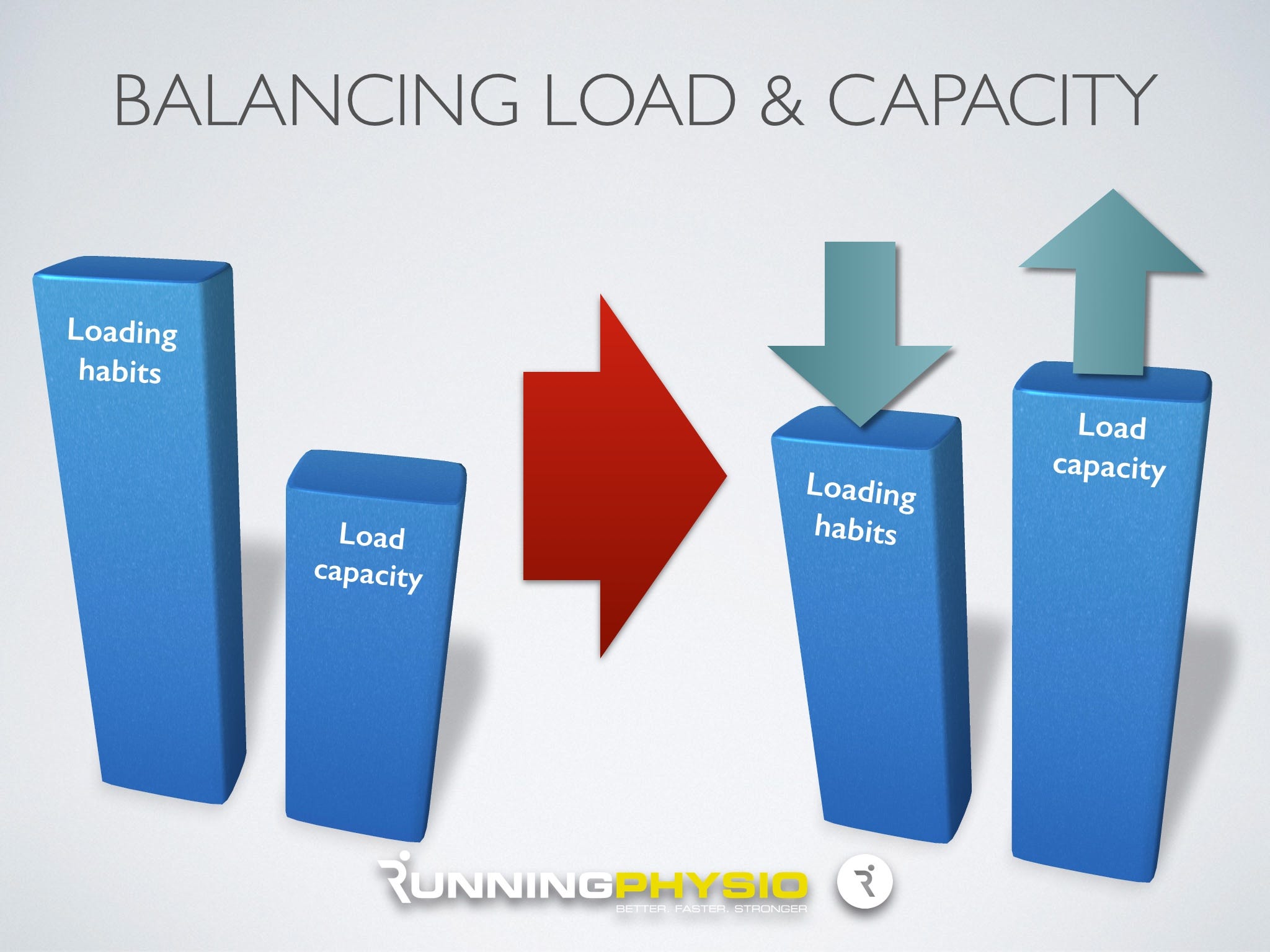
Rehab too often avoids the intensities that caused the injury in the first place. Initially, this makes sense—don't insult the area—but if you never work to progressively reintroduce that level of demand, you’ve built no buffer.
Working around an injury is not working on it. We need to gradually reintroduce stress to the injured tissue to create the capacity to withstand future demands.
“Do no harm” is good in theory—but in practice, it can become “never push for a specific adaptation.”
Standard Rehab Does a Lot Well
Let me be clear: standard rehab helps a lot of people. It can:
Reduce pain
Get people moving
Introduce general strength exercises
Build confidence
But it’s rarely joint- and connective-tissue specific, because the lens it uses has some very outdated approaches. And with more athletes dealing with injuries to these tissues, it’s worth questioning what’s missing—and who’s best equipped to help.

What It Really Means to Return to Play
Injuries provide useful feedback:
Your tissue wasn’t prepared for the forces placed on it.
Your sport may not be ‘good’ for your joint health—by default.
That doesn’t mean stop playing. It means you must accept the joint specific demands, and better prepare moving forward.
Rehab should not be a “temporary fix”—it should be ongoing training. Just like you train year-round for your sport or activity, you should train year-round to mitigate injuries.
We call this prehab: joint- and tissue-specific training tailored to your limitations and the demands of your sport. It’s not reactive—it’s proactive. And it’s how you build long-term durability.
Your Body’s Not Broken—Your Framework Might Be
If you’re stuck in the loop of re-injury, partial recovery, and plateaued progress, it’s time to update your lens.
Most injuries don’t fail to heal because of lack of effort—they fail because of lack of specificity. There is a deeper level of work that’s often overlooked: the tissues, joints, and structures that take the brunt of your sport.
The good news? Those things can adapt. If you train them properly.
In my next post, I’ll share more about my own injuries—and how a tissue specific approach helped me manage multiple injuries, returning to my sport better than before.
If you’re interested in 1:1 training or are an FRS® provider looking for guidance, visit www.theartofstrong.com.
If you’re a fitness professional or manual therapist interested in our courses, visit www.functionalanatomyseminars.com.
Have suggestions for what kind of content you want to see? Drop a comment and let me know.
References
Killian, M. L., Cavinatto, L., Galatz, L. M., & Thomopoulos, S. (2014). Chronic tendon injury results in diminished matrix and mechanical properties in a rat model of rotator cuff disease. Journal of Orthopaedic Research, 32(4), 532–538. https://doi.org/10.1002/jor.22519
Dye, S. F. (2005). The pathophysiology of patellofemoral pain: A tissue homeostasis perspective. Clinical Orthopaedics and Related Research®, 436, 100–110. https://doi.org/10.1097/01.blo.0000172303.74414.7d
Gabbett, T. J. (2016). The training-injury prevention paradox: Should athletes be training smarter and harder?British Journal of Sports Medicine, 50(5), 273–280. https://doi.org/10.1136/bjsports-2015-095788
Cook, J. L., & Purdam, C. R. (2009). Is tendon pathology a continuum? A pathology model to explain the clinical presentation of load-induced tendinopathy. British Journal of Sports Medicine, 43(6), 409–416. https://doi.org/10.1136/bjsm.2008.051193