
Treatment creates the signal. But it’s the practice between sessions that drives the outcome. This isn’t just a theoretical idea—it’s a practical lens that reshapes how we approach rehab, performance, and client autonomy.
We often obsess over what happens on the table—given how valuable manual inputs can be. But what happens after the session? That’s where most adaptation—or regression—actually takes place.
The real question is: How do we turn what we do in-session into something clients can understand, apply, and refine on their own?
It’s not about layering on more techniques. It’s about deploying what you already know—whether that’s FRC®, FRA®, FR®, or ISM—with more strategy and intention.
Here’s where that starts:
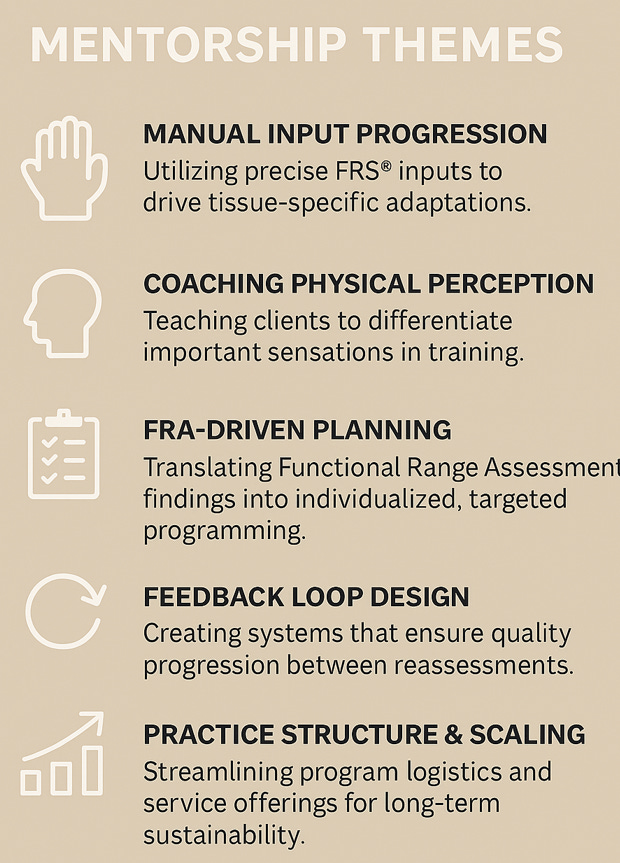
Manual inputs that guide tissue response and create a clear sensory reference
Coaching strategies that help clients identify useful sensations—and self-correct when needed
FRA®-based plans that connect directly to scalable, progressive training variables
Feedback systems that sustain quality and independence between sessions
Whether you’re a manual therapist, strength coach, or rehab professional, this lens helps bridge the gap between what you do and what your clients actually take with them.
In my mentorship work, this is the core focus: refining the practitioner-to-client signal so outcomes aren’t just possible—they’re sustainable.
If you're serious about applying this work with more precision, I offer 1:1 mentorship to a limited number of providers. Reach out if you're ready to take that next step.
Connect with me:
📍 Instagram: @alexnich0ls
🌐 Website: www.theartofstrong.com
📬 Email: alex@theartofstrong.com